An empty silo is only part of a harvest plan. The useful question is how much grain the farm can receive, keep in condition and move out when needed. Before the first load arrives, give every storage a job, check its equipment and decide who will respond if conditions change.
A timely lesson from the northern harvest
On 7 October 2026, University of Illinois researchers reported that US grain storage was sufficient in aggregate for existing stocks and the expected autumn harvest. However, their calculation of potential storage demand exceeded capacity in ten of thirteen Corn Belt states. They also explained that grain moving through processors and export channels usually eases that pressure, making a 2026 storage crunch unlikely under their assumptions. Those figures describe potential demand, rather than silos already filled beyond capacity. Read the farmdoc analysis.
For Australian growers, this is a reminder to check local bottlenecks. It is not an Australian shortage forecast. ABARES' September 2026 Crop Report forecast a 61 million tonne winter crop, with stronger prospects in several southern regions and poorer conditions in northern NSW and Queensland. That was a forecast, not a measured harvest result, and individual farms can differ substantially. Read the Australian Crop Report.
The management implication is straightforward: plan around your expected loads, existing stocks and confirmed receival options.
1. Map usable space and the next destination
Make a one-page storage map. For each silo or bay, record its identifier, current contents, usable capacity for the intended commodity, planned crop or grade, and any equipment fault. Identify where loads requiring different handling can be kept separate.
Then run a simple daily balance: grain already held, plus likely arrivals, minus confirmed departures. Include a scenario where a truck, buyer's receival slot or piece of handling equipment is unavailable. A planned collection should have a date and a fallback before it is counted as free space.
This is a planning exercise, not a reason to fill beyond a structure's rating or use unsuitable temporary storage. If the balance does not work, address receival, segregation or delivery arrangements before the header is waiting.
2. Make intake measurements useful later
AHDB's grain-sampling guidance identifies filling as the best opportunity to obtain representative samples. Testing then helps determine drying requirements, quality and the appropriate storage strategy. The guidance comes from the UK; Australian buyer specifications and local sampling protocols still apply. Read the intake-sampling guidance.
Give each lot a traceable record: paddock or source, crop and variety where relevant, arrival date, destination storage, moisture result and sample identifier. Keep materially different grain identifiable rather than losing its history in a general bulk.
Before harvest, check the moisture meter's condition, commodity setting and calibration procedure against its manufacturer's instructions. Agree with your adviser or buyer on suitable moisture limits for the commodity, storage duration and equipment available. One percentage copied from a maize or wheat guide will not suit every grain or oilseed.
A useful handover question is: if this load needs drying or further testing, where will it go and who makes that decision?
3. Confirm what the aeration system can do
Cooling and drying require different system performance. A March 2024 GRDC technical paper gives design airflow ranges of 2–4 litres per second per tonne for aeration cooling and 15–25 for aeration drying. It also shows why grain type, depth and resistance to airflow matter. A fan running beside a silo does not, by itself, establish adequate airflow through its contents. Read the GRDC aeration paper.
Ask the supplier or a grain-storage specialist to confirm performance for your actual commodity and fill depth. Check fans, ducts and controller operation before filling. If the plan depends on drying, verify that the system is designed for it; do not assume a cooling fan will make wet grain suitable for long-term storage.
Record the agreed operating approach beside the storage plan so relief staff know which equipment and settings apply.
4. Give every reading a response
AHDB recommends monitoring both grain moisture and temperature, and keeping records that reveal trends. Its guidance notes that fixed sensors can support remote monitoring, while temperature checks can help identify hot spots associated with insects or water leaks. Read the storage-monitoring guidance.
For a practical monitoring plan, agree on:
- Which locations and depths are being measured, and where there are gaps
- The normal range and escalation limits for that lot and storage
- Who checks readings, who receives alerts and who covers their absence
- What happens after rising temperature, changing moisture or missing data
A sensor reports conditions around its measurement point. Keep grain sampling and pest inspections in the plan. Check timestamps, power and communications before treating a flat trend as reassurance. Test an alert end to end and confirm that it reaches the person expected to act.
Set inspection frequency with your storage adviser for the grain's condition and risk. Investigate an abnormal change promptly rather than waiting for the next scheduled round. Keep the observation, action and recheck together in the record.
5. Design the checks around safe access
Use external or ground-level checks wherever practicable. Never enter a silo to investigate a sensor alert or clear grain without the required confined-space procedures and competent personnel. SafeWork NSW's checklist covers eliminating entry, entrapment and atmosphere hazards, equipment isolation, access controls and rescue arrangements. It is a useful starting point for a site-specific review, not a complete entry procedure. Use the silo-safety checklist.
This week's storage check
Before accepting grain, confirm:
- Every storage has an assigned purpose and realistic available capacity
- Intake sampling and lot identification are ready
- Cooling or drying capability matches the intended use
- Monitoring has named owners, tested alerts and a response plan
- Safe access, equipment isolation and emergency arrangements are understood
Start with the storage most likely to create a harvest bottleneck. Walk through one incoming load and one abnormal reading with the people who will handle them. That small rehearsal can expose missing decisions while there is still time to resolve them.
Prepared for the week of 12 October 2026. This note combines a recent international harvest analysis with Australian production forecasts and established storage guidance. Apply it to local conditions with your grain-storage adviser and equipment supplier.
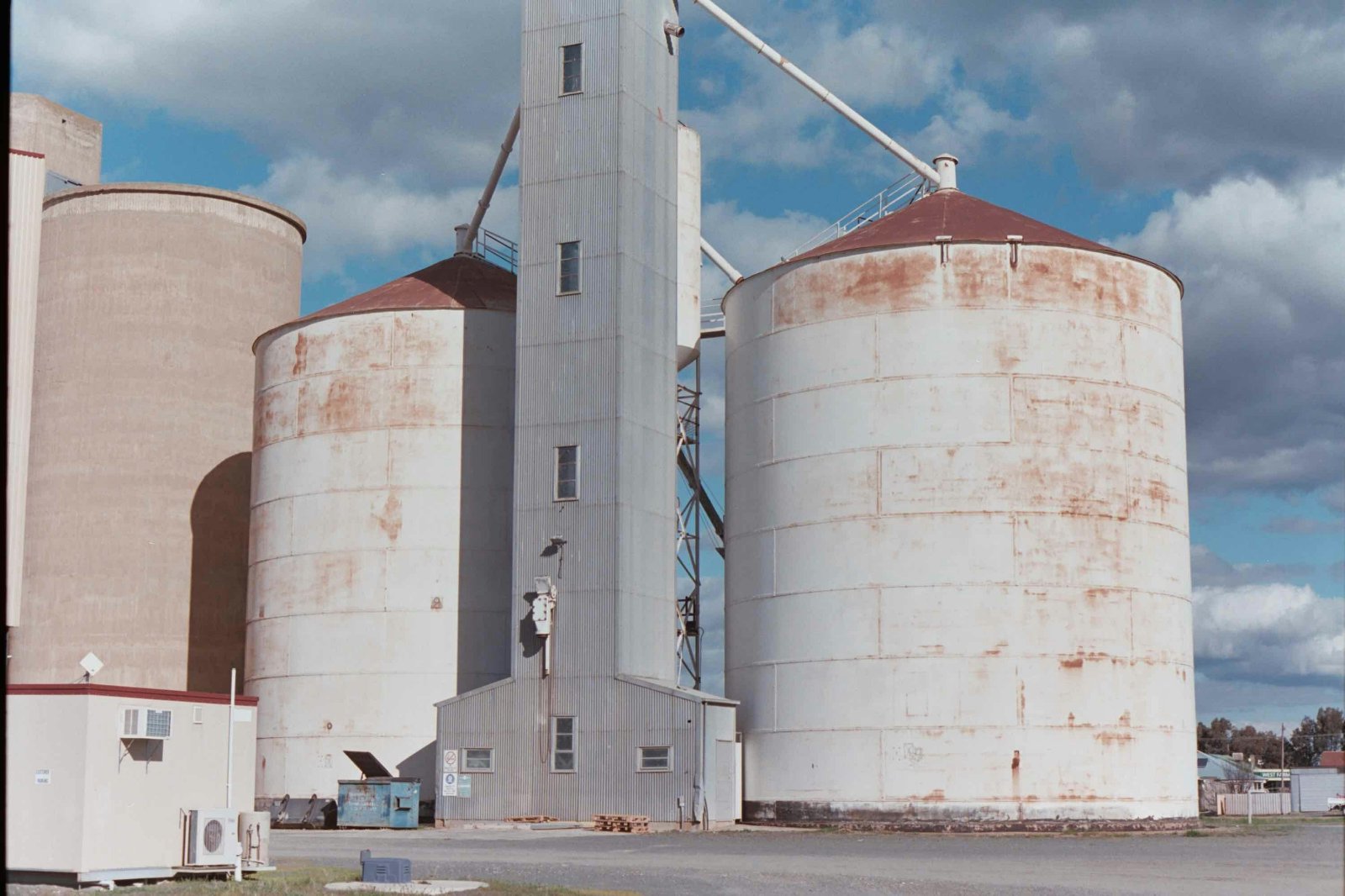
Illustrative grain-storage scene in Colbinabbin, Australia. Photo by Lucas Hunter on Unsplash, used under the Unsplash License. This photograph does not show an Aurai installation.